
Small Habits, Quietly Compounding
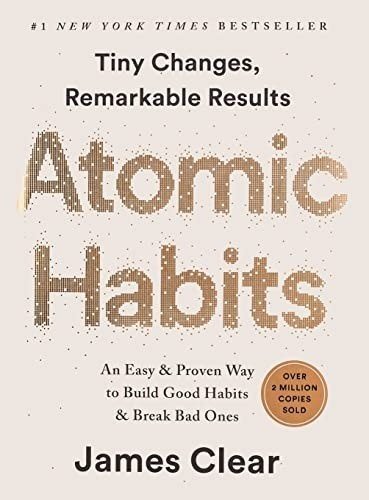
I recently finished reading Atomic Habits by James Clear. It is a book about habits, but it is really a book about how people change: slowly, quietly, and through the systems they build around themselves rather than the goals they announce.
The central idea is simple enough to remember and hard enough to practice: if you improve by just one percent each day, the gains compound. Small improvements look invisible in the moment and enormous in hindsight.
Here are the lessons that stayed with me.
1. Systems Beat Goals
Goals set a direction, but systems decide what actually happens. Every runner at the start of a marathon wants to finish. What separates them is the training that came months earlier.
The practical question is not “What do I want to achieve?” but “What will I do every day, regardless of how I feel?”
2. Identity Comes Before Outcomes
Clear describes three layers of change: outcomes, processes, and identity. Most of us start with outcomes (“I want to write a book”). Lasting change starts with identity (“I am a writer”).
Every small action becomes a vote for the person you are becoming. You do not need a unanimous election, only a steady majority.
3. Make It Obvious, Attractive, Easy, and Satisfying
The book’s four laws of behavior change follow the habit loop of cue, craving, response, and reward. To build a good habit, make the cue obvious, the habit attractive, the action easy, and the reward satisfying.
To break a bad habit, invert them. Make the cue invisible, the habit unattractive, the action difficult, and the reward unsatisfying.
4. Design Your Environment
Willpower is a weak strategy when the environment keeps pulling in the opposite direction. Clear suggests making good cues visible and bad cues hard to reach.
Two tools helped me think about this more clearly. Implementation intentions, a plan that says when and where you will act. And habit stacking, attaching a new habit to one you already have.
5. Start Smaller Than Feels Reasonable
The two-minute rule says to scale any new habit down until it takes two minutes or less. The point is not the two minutes. The point is to master the art of showing up.
And when you do miss a day, the rule is simple: never miss twice. One slip is an accident. Two begins a new habit.
Why This Matters Beyond Self-Improvement
Habits are not only personal. Classrooms, teams, and institutions are also built from repeated behaviors, whether anyone planned them or not. Culture is simply what people do again and again.
For students, writers, and researchers, the lesson is especially useful. Motivation is unreliable, but a small daily practice is not.
Final Reflection
The most valuable thing I took from this book is a shift in what counts as progress. It is not the dramatic breakthrough. It is the unremarkable repetition that nobody applauds.
If you want a different life, do not wait for a different mood. Change what you repeat.
Keep Reading
Thinking, Fast and Slow: Key Lessons and Reflections
We like to believe our decisions are rational. Daniel Kahneman’s Thinking, Fast and Slow shows how often we are guided by shortcuts instead. In this reflection, I share the ideas that stayed with me and why they matter far beyond psychology.
Self Leadership and the One Minute Manager: Key Lessons and Reflections
Leadership begins long before titles, promotions, or authority. Self Leadership and the One Minute Manager is a reminder that the quality of our work, relationships, and personal growth depends first on how well we lead ourselves. In this reflection, I share the lessons that resonated with me most and why they matter far beyond the workplace.
Set Boundaries, Find Peace
Nedra Glover Tawwab's practical case for boundaries as the foundation of healthy relationships — not walls, but clarity.
Comments
No comments yet — be the first to share your thoughts.